
First-design 4GC ca. 1953 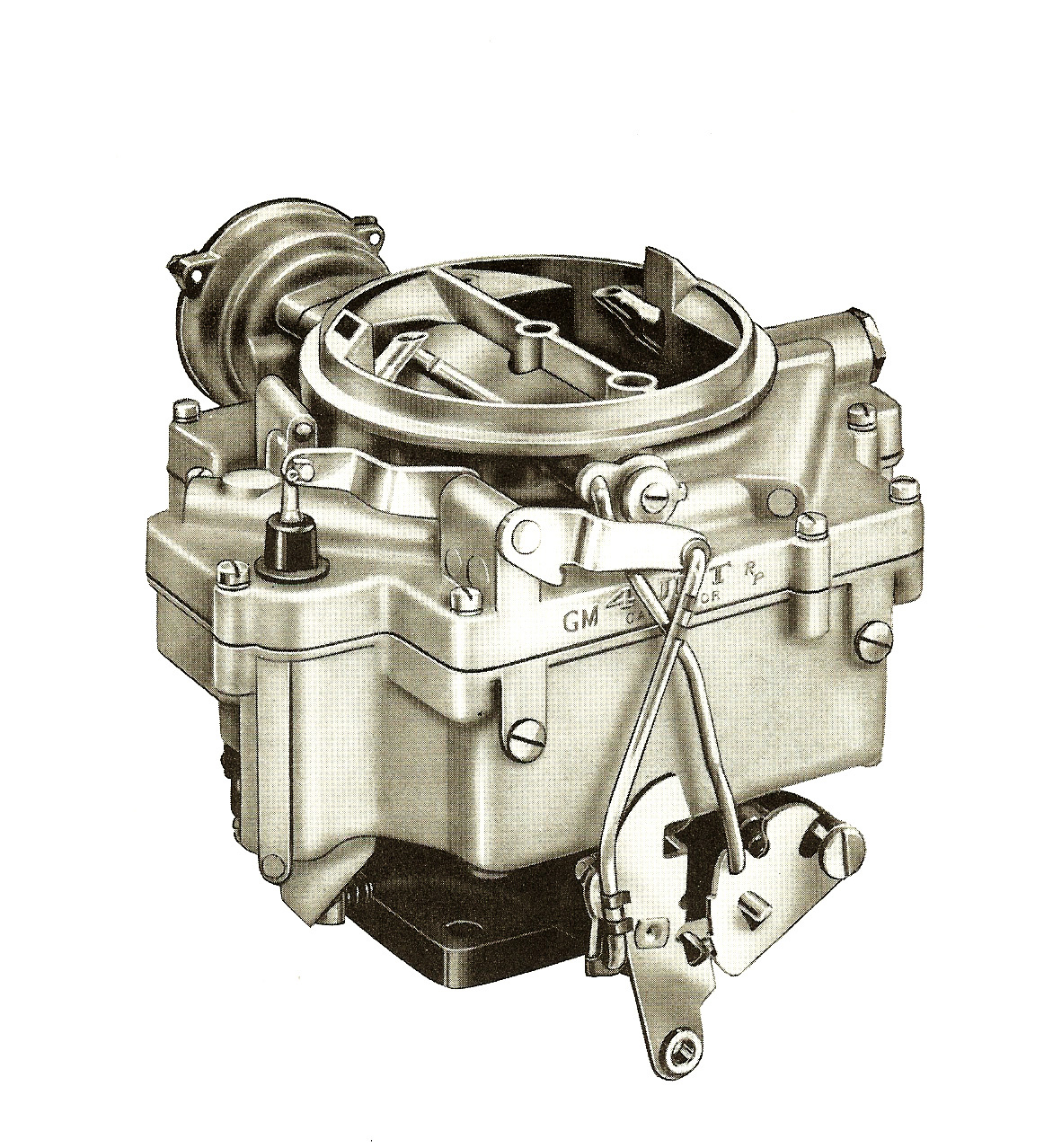
The Rochester 4-Jet carburetor was a downdraft four barrel carburetor produced by the Rochester Products Division of General Motors from 1952 until 1967. It was first used on Oldsmobile and Cadillac in 1952 and was used on GM, Packard and Studebaker cars and trucks into the mid 60's. The last application was on Chevrolet trucks in 1967.
The 4-Jet consists of a pair of two barrel carburetors back to back, with the primary side being similar in design to the earlier Rochester model BB carburetor. Some of the components, such as the power valve are shared with model 2G carbs.

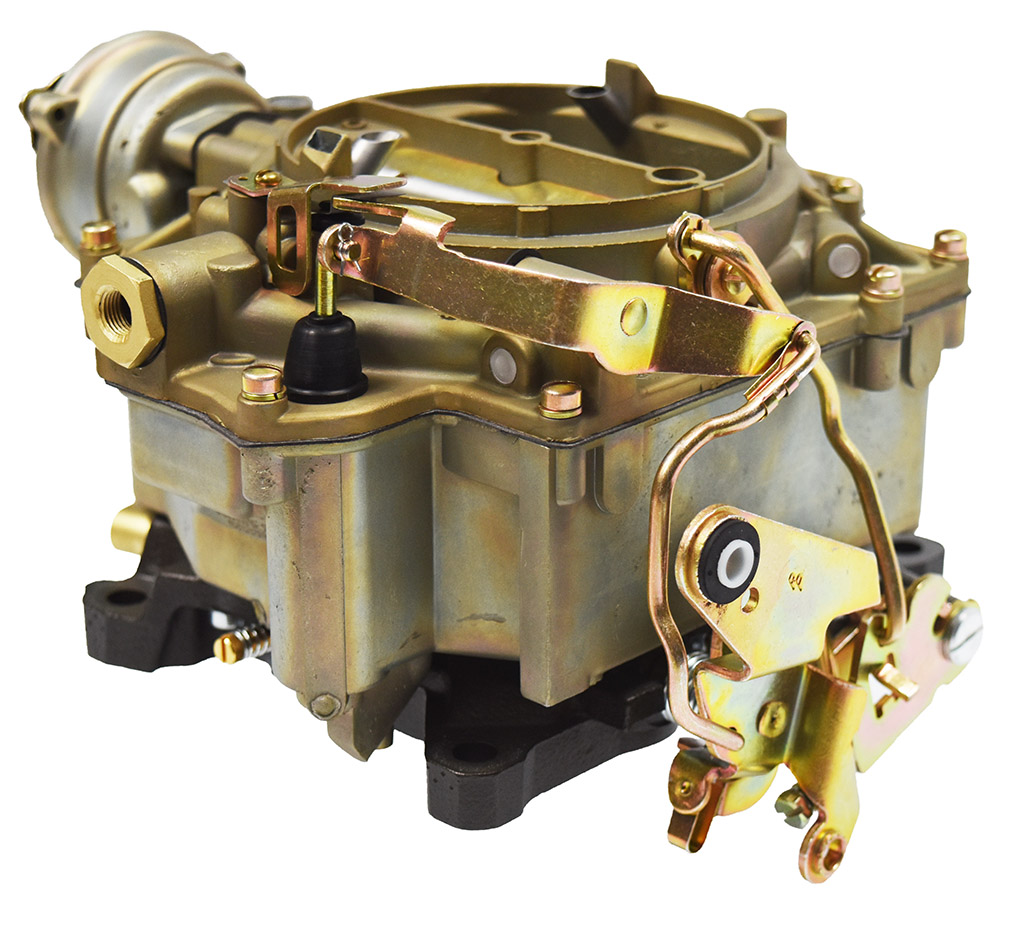
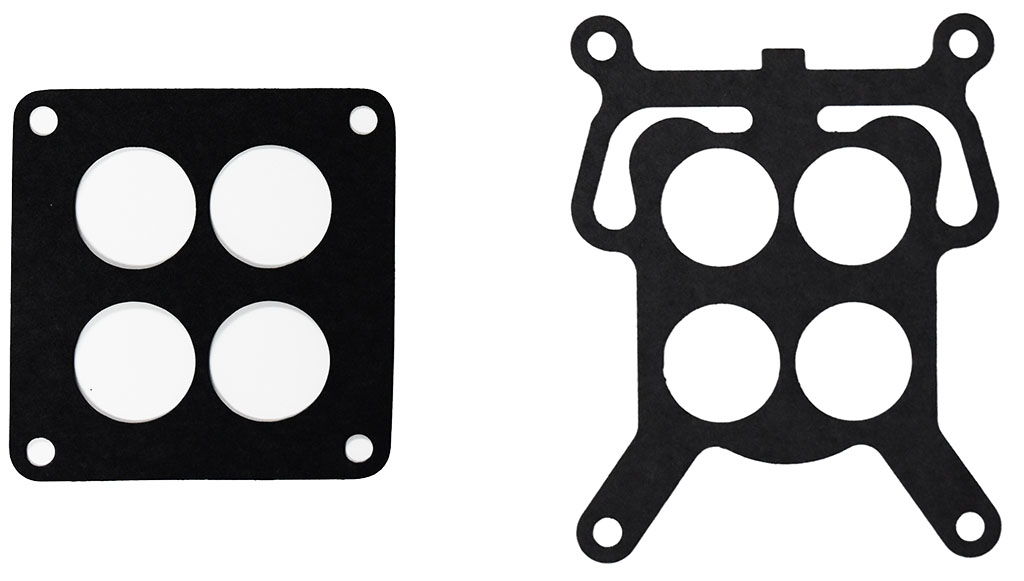
Rectangular flange, right, has 4-1/4" X 5-5/8 inch bolt centers
The approximately square flange was used on Rochester 4 Jets until 1958. After that, the most common flange on Chevrolet engines was the rectangular flange. Several other versions of the rectangular flange were used on different engines, but had the same bolt spacing.
Versions
1964 Oldsmobile Jetstar 88 Rochester 4GC showing float bowl mounted choke thermostat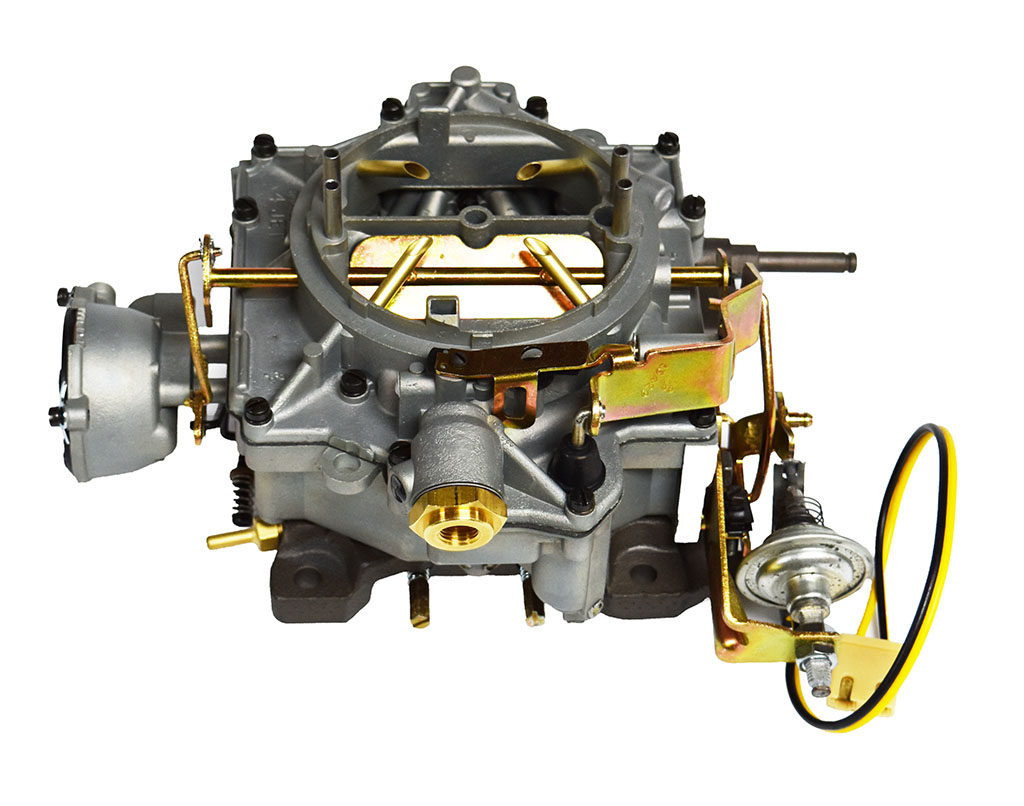
Rochester 4-Jet carbs came in three general versions:
- 4G with manual choke
- 4G with manual choke and governor in heavier trucks
- 4GC with an automatic choke mounted on the side of the carburetor
Early models (see 1958 Chevy carb, above) had the choke mounted on the airhorn (top third of the carburetor). Starting in the early-1960's the choke thermostat moved down to the float bowl.
Although the 4-Jet is generally considered a 'square-bore' carburetor, many had substantially larger secondary bores than primary bores, especially in early 1960's Buick and Pontiac versions. Also, while most 4-Jets had a cast iron throttle body, some of these Buick and Pontiac carbs had aluminum bases.
Carburetor numbers were on a round tag, at first brass, later aluminum, that was attached to the to of the carburetor. Some Buicks had the last 4 digits of the carburetor number stamped on the top of the carburetor near the rear. Factory original gasket sets sometimes had part of the carburetor number stamped on the airhorn (top of float bowl) gasket.