
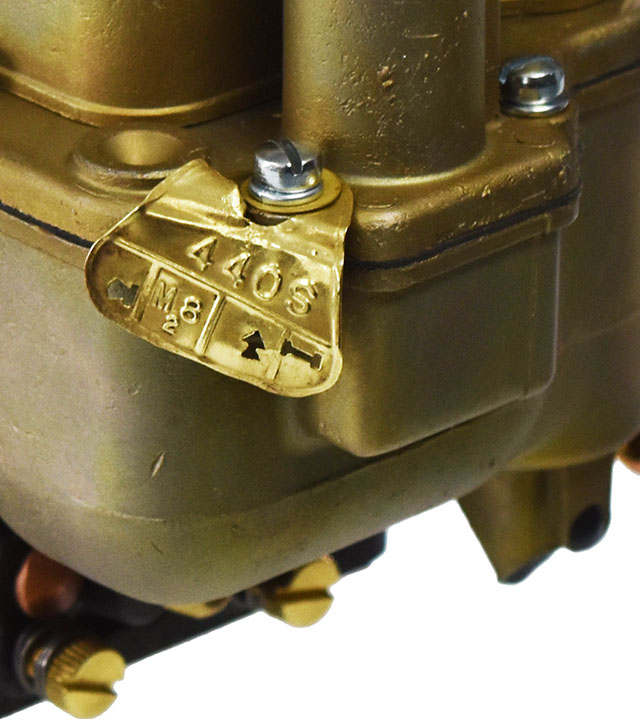
Most Carter carburetors used a brass or aluminum tag with the carburetor number. The tag shown is a brass tag from a Carter 440S, which is a model WDO from a 1939-1940 Buick.
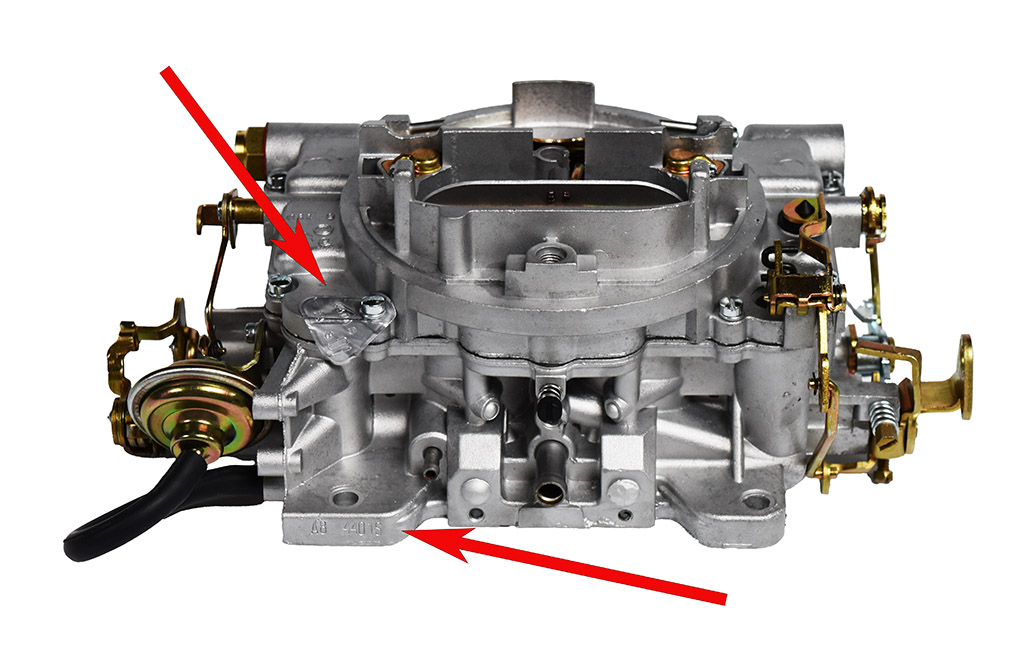
Some carburetors came with both a stamped number and a tag, like the Carter 4401S model AVS from a 1968 Chrysler 383 A/T. A few AFBs did not have a stamped number, just a tag.
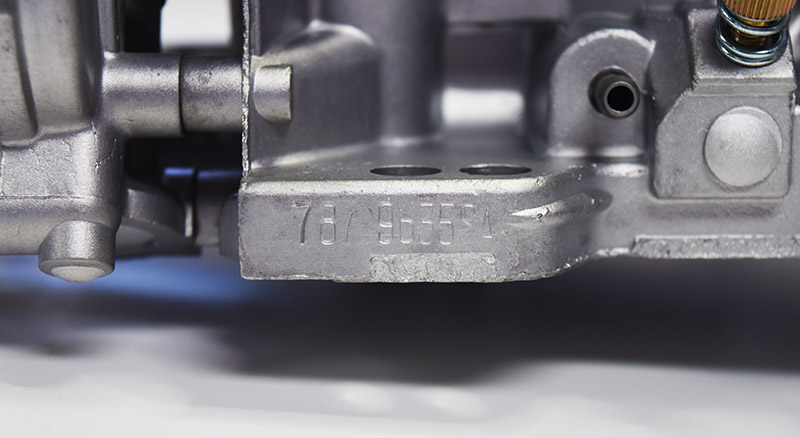
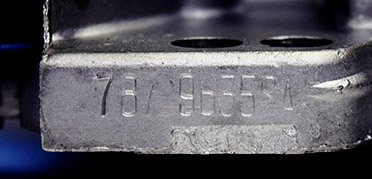
The stamped carburetor number on Carter AFB and AVS carbs is on the front, passenger side on the vertical edge of the mounting flange near the mounting stud/bolt hole. This one is a 9635SA, which is an aftermarket Carter Performance AFB, 625 CFM with provision for EGR.
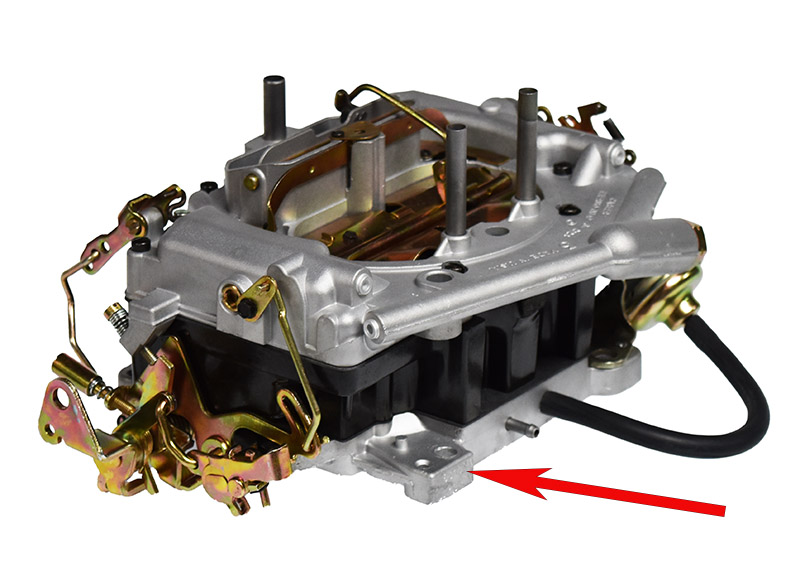
Carter Thermoquad carburetors have the number stamped on the back driver's side of the base.
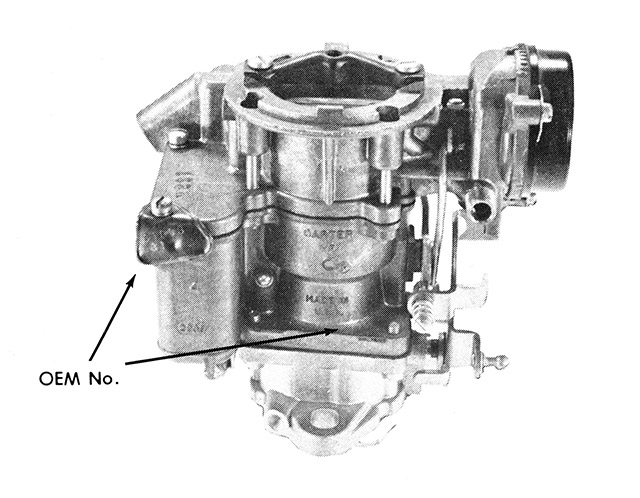
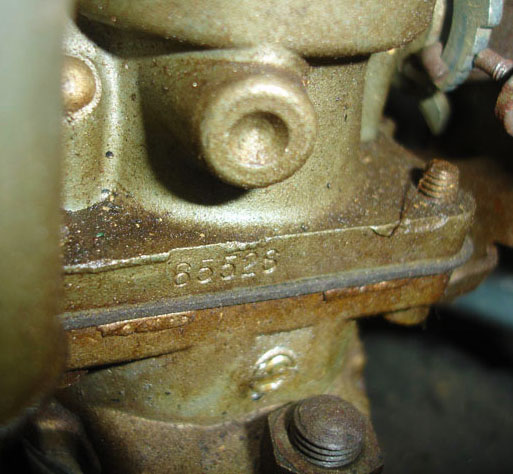
All Carter YF and YFA carbs had a tag. Some had a stamped number as well, usually on the edge of the flange on the float bowl where it meets the throttle body (base) of the carb. The close-up below is from a Carter YF 6552S from a a 1971-1972 Jeep 6 cylinder.
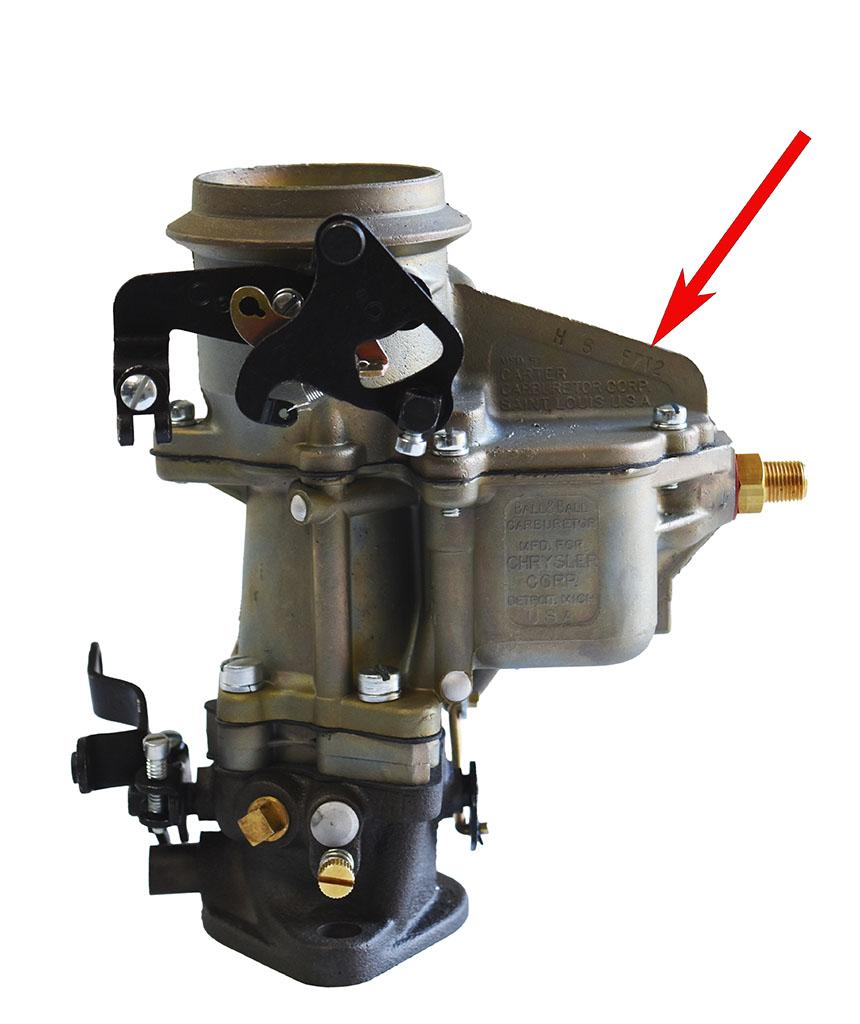
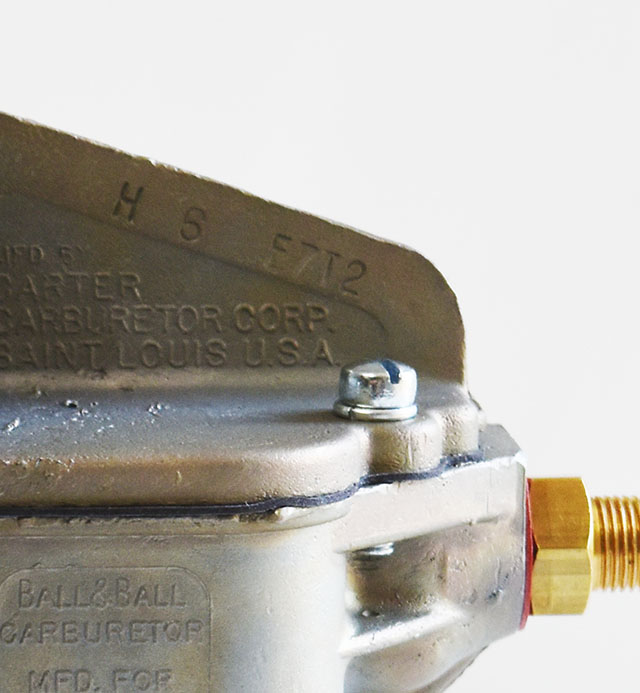
Many Carter carbs made for Chrysler Corporation, especially model BB (Ball & Ball) one-barrels, had an alphanumeric carb 'number', sometimes stamped on a diagonal brace on the top of the carb. This one is an E7T2 from a Chrysler Industrial engine.
Identifying Carbs Without a Tag or Stamped Number
This can be tricky. It's best to start with the application and try to match up the carb from there. In some cases you may have to disassemble the carb to identify it by component parts, in particular from the accelerator pump dimensions.
Carbs from the 1950s and older can often be identified from flange numbers: How to identify a Carter carb from the flange number.